01
cnc turning

A component must not only match the drawing. You also want to be able to count on the same dimensions and quality during production and for subsequent orders. At Brans, we combine technical expertise with a carefully designed production process. We assess manufacturability, select the appropriate CNC machining method, and document key production data. This is how we make complex series production predictable.

We examine the geometry, the material, the tolerances, and the desired quantities. This allows us to determine which machining method is appropriate and identify any technical considerations.

With a well-thought-out production strategy, clear agreements, and targeted quality controls, we maintain control over production. This helps prevent deviations and unnecessary delays.

We record relevant production data. This allows us to build on a proven process for subsequent orders and maintain consistent quality in future production runs.
Not every component requires the same machining method. CNC turning focuses on round shapes, precise diameters, and fits. CNC milling is suitable for components with complex contours, cavities, bores, and machining operations on multiple surfaces.
Does a component feature both turned and milled features? If so, multitasking may be a suitable solution.
In this process, we combine turning and milling operations within a single production process. Where this offers technical advantages, we minimize the number of setups and keep the inter-part dimensional relationships manageable.
The most suitable method depends on the geometry, the material, the tolerances, and the desired quantities.
We assess these factors in advance and tailor the machining strategy accordingly.
A technically sound design is not necessarily easy or efficient to mass-produce.
That is why we assess in advance how a component can best be manufactured. We examine the geometry, machinability, clamping, and specified tolerances. The material and desired quantities also play a role.
Based on that, we determine an appropriate processing sequence and the necessary checks.
If we see opportunities to improve manufacturability, we discuss them.
For example, when a different machining sequence or a design modification can simplify the production process without altering the component’s function. This prevents technical issues from becoming apparent only during production.

CNC machining isn’t just about the first approved component. The entire series must meet the agreed-upon specifications. And when placing a repeat order, you want to be able to rely on that. That’s why we document key production data, such as programs, tools, clamping setups, and measurement protocols. For subsequent series, this data serves as the starting point for preparation.
During production, we inspect the characteristics that are critical to the component’s functionality.
To do this, we use appropriate measuring equipment, including CNC 3D coordinate measuring machines. Brans is ISO 9001 certified.
Our approach ensures that the quality and repeatability of series production remain under control.
The material helps determine the best way to machine a component.
Aluminum, stainless steel, steel, and non-ferrous metals each have their own properties. We can also machine engineering plastics.
We take into account the combination of materials, geometry, and functional requirements. These include precise fits, the desired surface quality, and characteristics that are critical to assembly. In this way, we select not only a machining process that is technically feasible, but also an approach that is suited to the application and the desired volume production.
Some components require additional processing after CNC machining. This includes cleaning, surface treatment, marking, or assembly.
Where necessary, we coordinate these follow-up steps with the technical requirements and production planning. Explore our finishing options
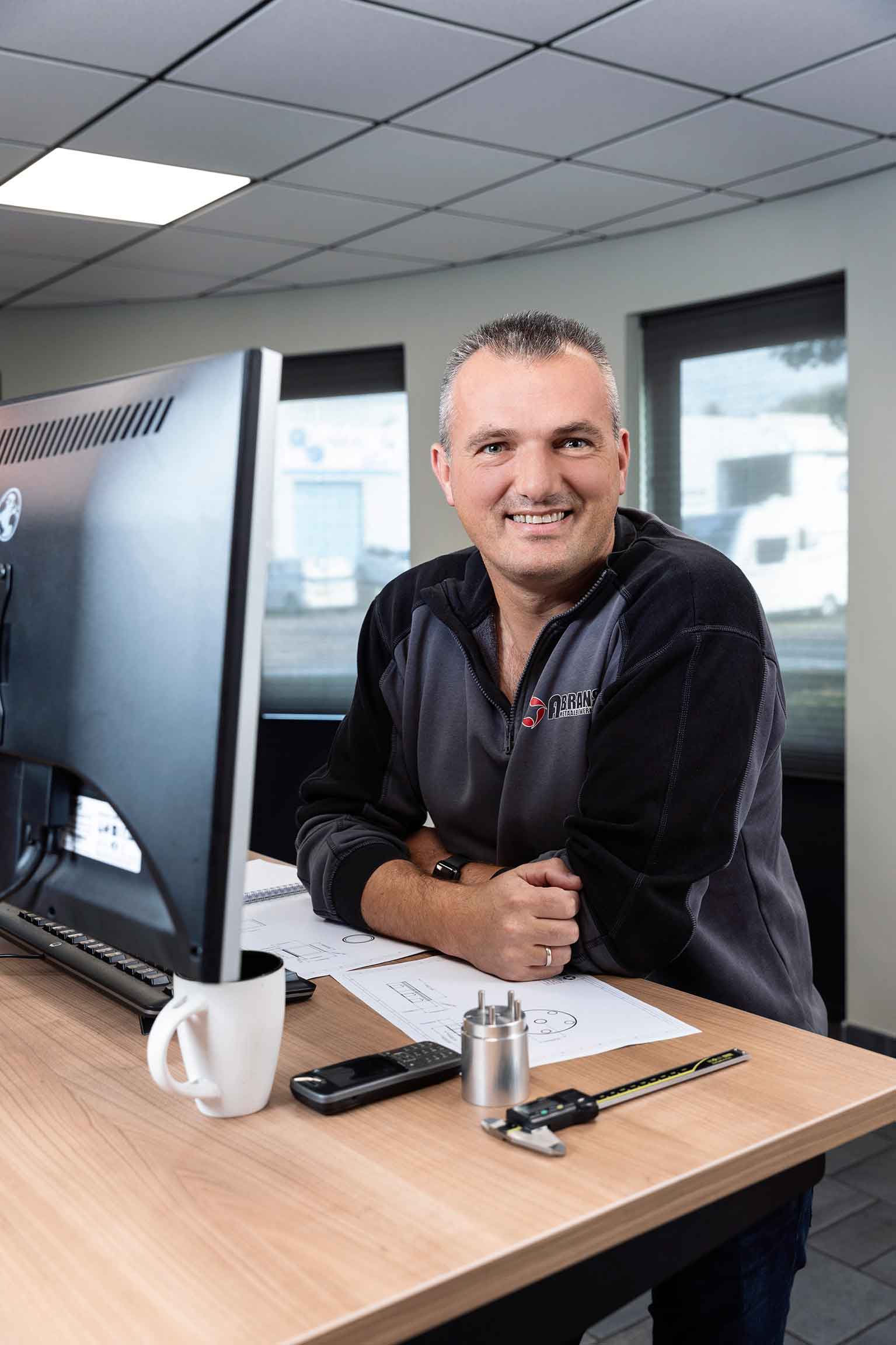
Do you have a technical drawing or 3D model of a component that needs to be mass-produced?
Send us the specifications, the desired material, and the quantities. We’ll assess the manufacturability and discuss which CNC machining method is best suited for your component.
That way, you’ll know exactly what to expect in advance.


