Vapor-phase degreasing of metal components
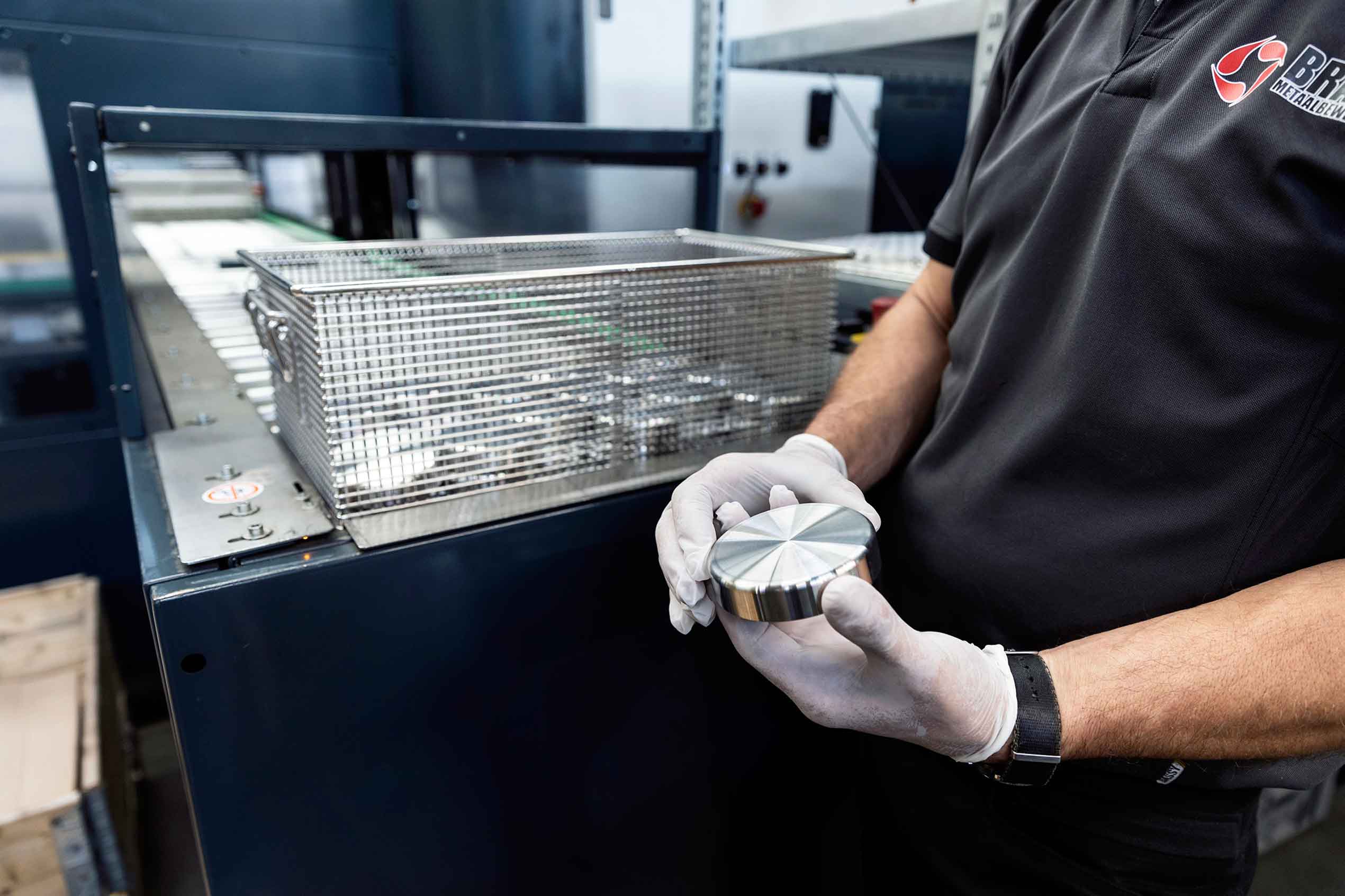
After CNC turning or milling, oil and grease residues may remain on metal components. At Brans, we clean these using our vapor degreaser, which employs modified alcohol to remove contaminants. This ensures your components are clean and ready for the next step in the production process.

Clean after machining
Vapor-phase degreasing of metal components
After CNC turning or milling, oil, grease, and other process residues may remain on a component. You don’t want to carry that contamination over to the next step in your production process. At Brans, machined components are cleaned as standard using our vapor degreaser. This removes grease and oil residues that accumulate during machining. As a result, we deliver components that not only meet the specified dimensions but are also clean and ready for further processing. An important step in a controlled production process.
Cleaning with Modified alcohol
How does vapor degreasing work?
Vapor degreasing is a cleaning method that uses a cleaning agent to remove oil and grease from metal surfaces.
At Brans, we use modified alcohol. Heating and evaporation create a cleaning process that removes grease and oil residues from the components.
The evaporation process helps keep the cleaning agent pure. This allows components to be cleaned in a controlled manner, without contamination from previous operations being reintroduced onto the surface.
The result is a clean component that is suitable for the agreed-upon subsequent steps in the production process.
Cleaning as a Standard Production Step
Vapor Degreasing at Brans Metalworking
A precision-machined component is only ready for the next step when its cleanliness meets the application’s requirements.
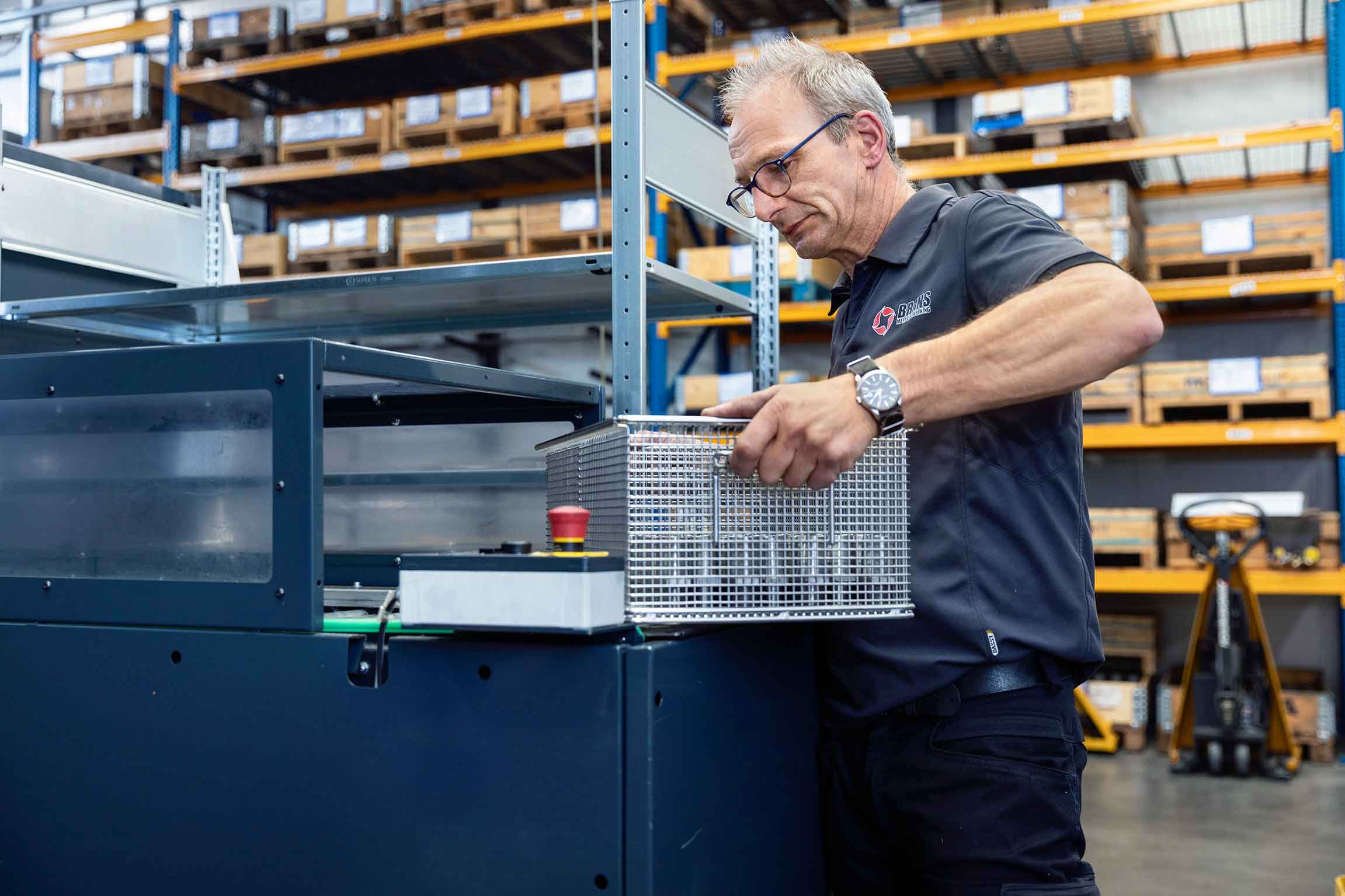
That is why vapor degreasing is a standard part of the post-machining production process at Brans.
By systematically incorporating this cleaning step, there is no need to reassess for each production order whether the usual grease and oil residues need to be removed.
This ensures a standardized workflow and helps deliver components with consistent initial quality.
Reduced Pollution in Subsequent Steps
Why is vapor degreasing important?
Residues of cutting oil, lubricants, and grease can cause problems when components are processed further.
Contaminated surfaces can be undesirable during assembly. Thorough cleaning is also important for the final result in certain surface treatments.
Vapor degreasing helps remove these process residues before the components move on to the next production step.
For you, this means that the removal of typical machining residues is already part of the process at Brans. This helps you avoid unnecessary extra steps in your own production process.
Cleanliness Tailored to the Application
When do additional cleanliness requirements apply?
Not every application has the same cleanliness requirements for a component.
For a general machine component, removing oil and grease residues may be sufficient. For components used in, for example, medical technology, laboratory systems, or other sensitive applications, additional cleanliness requirements may apply.
These may include requirements regarding residual contamination, particles, or the way in which cleaned components are packaged.
That is why it is important to discuss specific cleanliness requirements in advance. This allows us to assess whether the standard vapor degreasing process is suitable or whether additional arrangements are necessary.
From Chipped to Cleaned
Vapor Degreasing as Part of Your Mass Production
Would you like to have CNC components manufactured that are delivered clean after machining? At Brans, vapor degreasing is included as standard in the production process.
Do you have specific requirements regarding cleanliness, packaging, or further processing? Please include these in your request, along with the technical drawing and desired quantities.
We’ll determine what arrangements are needed to ensure the cleaning process aligns properly with the intended use of your components.