
CNC Turning and Milling in a Single Setup
Multitasking for mass production of 10 to 10,000 units
Does your component have both turned and milled features that must fit together precisely? If so, every additional setup can affect the dimensional accuracy and the efficiency of the production process. With CNC multitasking, we combine different machining operations where it makes technical sense. This results in a controlled production process that remains reproducible even for repeat orders.

Fewer tensions
Combine turning, milling, and drilling on a single machine whenever possible, with fewer intermediate steps.

Focus on Critical Dimensions
The relative positions of turned and milled features form the basis for the machining strategy.

Reproducible mass production
A defined production approach helps ensure that the same procedures are followed for subsequent series.

When is multitasking appropriate?
Turning and Milling of Complex Components
A component with a turned fit, milled mating surfaces, or precisely positioned holes requires a manufacturing approach in which the various machining operations are coordinated. In CNC multitasking, turning and milling are combined on a single machine.
This is particularly interesting when the dimensional relationships between these features are important or when separate machining operations result in unnecessary handling. By combining machining operations wherever possible, we minimize the number of setups and keep the dimensional relationships more manageable.
The right sequence of operations makes all the difference
Milling and Turning with Attention to Dimensions
When a component is moved between different machines, it must be repositioned and clamped. This requires extra care when turned and milled features must be precisely aligned with one another.
With our multitasking machines, we combine turning, milling, drilling, and tapping into a single production process. Thanks to counter-spindle operations, multi-side machining is also possible, including six-side machining where the geometry permits. Consider shafts with milled surfaces, flanges with hole patterns, or components with eccentric bores. With these types of geometries, turned and milled features may need to fit together precisely.
This allows us to perform various machining operations on suitable components without having to re-clamp them on a separate machine each time. This helps ensure dimensional consistency and reduces unnecessary handling. We tailor the machining sequence to the geometry and the specified tolerances.

First, feasibility; then, machine selection
From Technical Drawing to an Appropriate Production Approach
Not every component that requires turning and milling operations is automatically suitable for multitasking. For multitasking, we can machine components with a diameter of up to approximately Ø280 mm and a length of up to approximately 1,000 mm. Whether a component within these dimensions is actually suitable also depends on its geometry, clamping method, and the required machining operations. We assess this based on your technical drawing or 3D model. The desired production run size is also a factor.
Sometimes, combining CNC turning and milling offers clear advantages. In other cases, performing turning and milling separately makes more sense from a technical or production standpoint. That’s why you’ll receive a proposal tailored to the requirements of your component—not based solely on a machine’s capabilities.
The choice of materials remains a determining factor
Multitasking with aluminum, stainless steel, and other materials
Combining turning and milling operations requires an approach that is suitable for both the geometry and the material of your component. Brans machines materials such as aluminum, stainless steel, steel, plastics, and non-ferrous metals like copper, brass, and bronze. We assess which materials and machining operations are suitable for a specific multi-task job based on the design.
Material properties influence the choice of tools, cutting conditions, and machining sequence. This is relevant, for example, for aluminum machine components where weight is a factor, or stainless steel components for applications that require corrosion resistance. By evaluating the material, geometry, and machining strategy together, we tailor the production process to the technical requirements of your component.

Checking the Measurements That Matter
Quality Control for Combined Turning and Milling Operations
In the case of a component with turned and milled features, an individual dimension may be within tolerance, but the relative position of the features is still critical to the component’s function.
That is why, during quality control, we examine the critical dimensions and geometric relationships in your drawing. Depending on the measurement task, we use appropriate measuring equipment, including CNC 3D measuring machines. Brans is ISO 9001-certified. Established procedures and quality controls ensure consistent production of the series.
Precision According to Your Specifications
With CNC multitasking, we can achieve accuracies of up to 0.01 mm, depending on the material, geometry, and clamping method. In doing so, we consider not only the individual turning and milling operations, but also the dimensional relationships between these operations.
The specifications on your technical drawing remain the guiding principle. We assess in advance which tolerances are feasible and how we will verify the critical dimensions.
The same guidelines for your next order
Reproducible turning and milling for repeat orders
For a repeat order, you want the new components to meet the same specifications as the previous batch. That is why we document the production process, including fixtures, tools, measuring equipment, and programs.
This data serves as the basis for subsequent production runs. This way, we don’t have to redefine the process each time, and we can prepare production according to the same guidelines. This ensures consistent quality and makes the production process more predictable, even when there is a gap between orders.
Incorporating the finishing process into the production workflow
Post-processing of turning and milling operations
Does your component require a surface treatment after machining, such as anodizing, nickel plating, or blasting? In consultation with you, we can incorporate the desired post-processing into the production process. In doing so, we take the material and technical specifications into account. This ensures that the machining and finishing processes are seamlessly integrated.
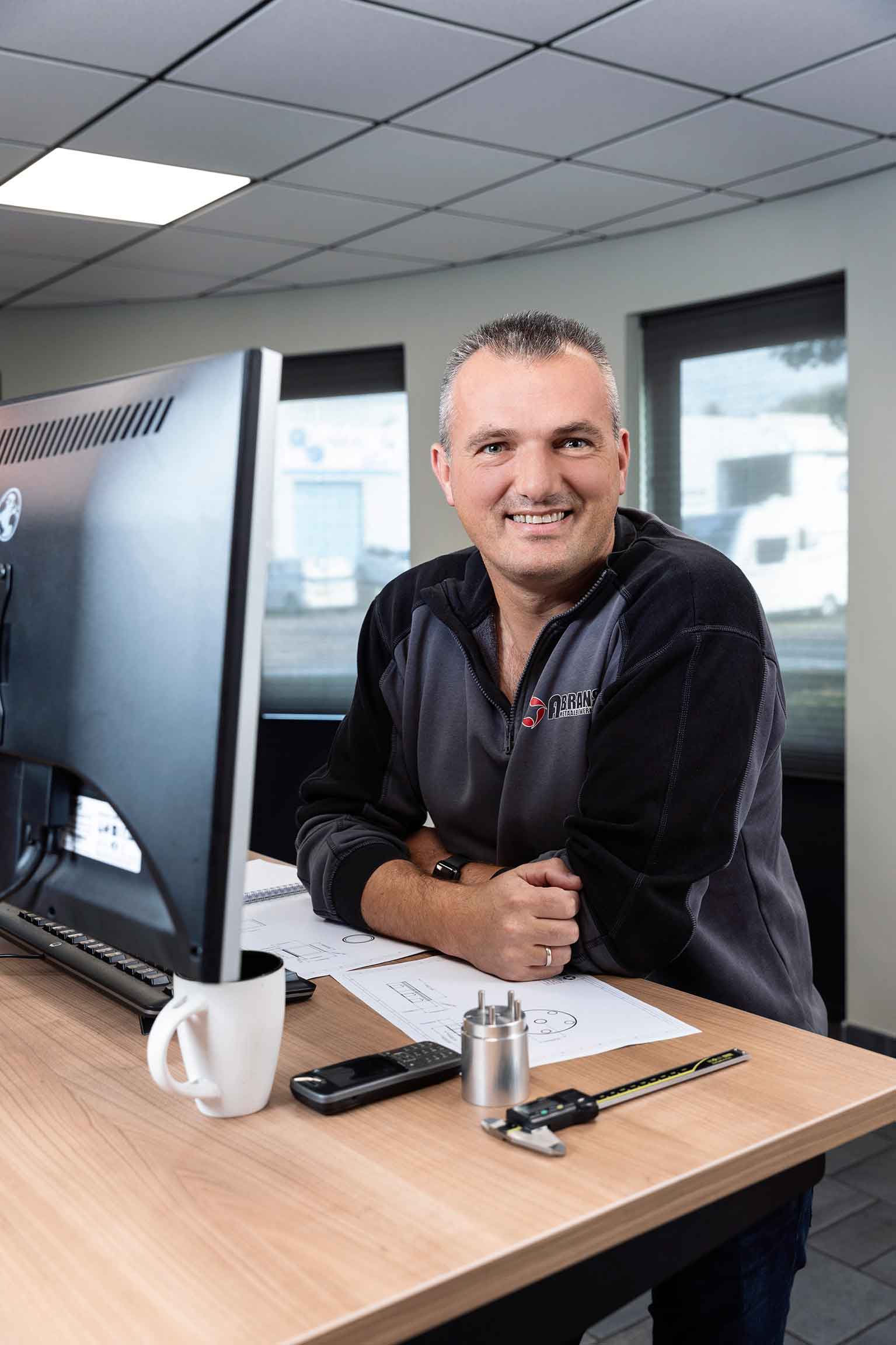
From Design to Reproducible Mass Production
Outsource CNC turning and milling to Brans
Do you have a component with both turned and milled features and want to know which manufacturing approach is best suited for it? Send us your technical drawing or 3D model, along with the desired quantities, material type, and relevant specifications.
We assess feasibility and determine whether multitasking is the right choice for your component. Based on that, we discuss the approach and prepare a quote.